Viking Windfarm Scotland UK
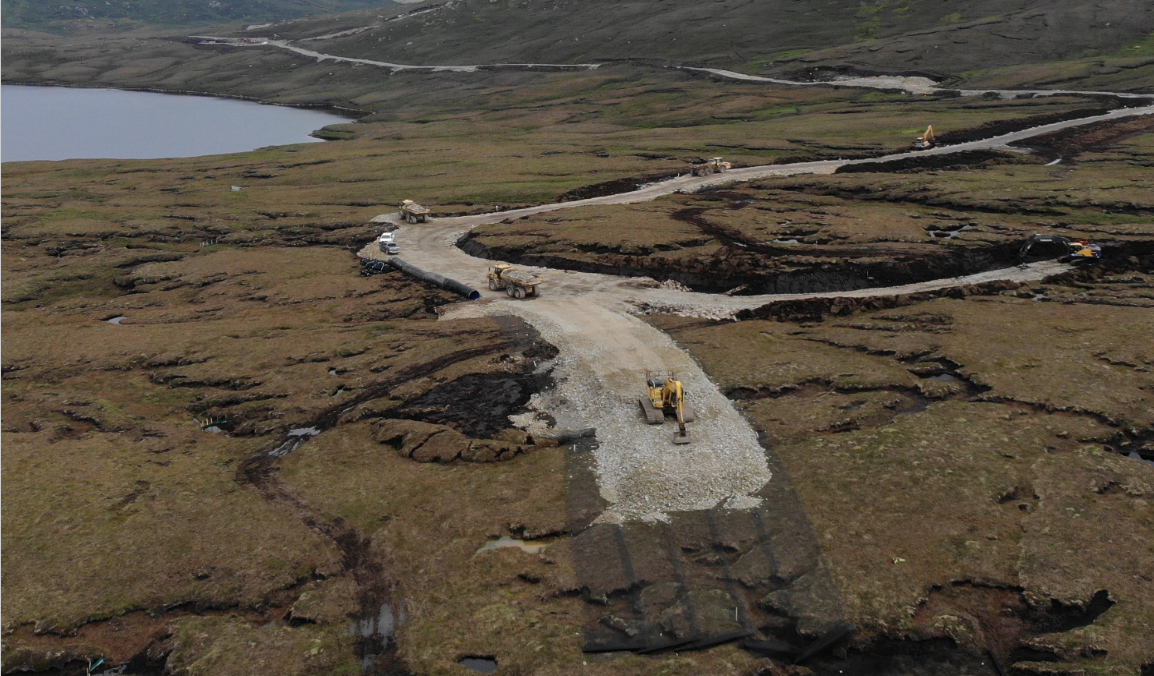
The Viking Wind Farm in Shetland is the UK’s largest onshore facility by output, and one of the world’s most productive onshore farms. Most of the site is located on peat and blanket bog. From the earliest planning stage, ‘floating roads’ using geogrids were proposed as the most environmentally appropriate solution for access.
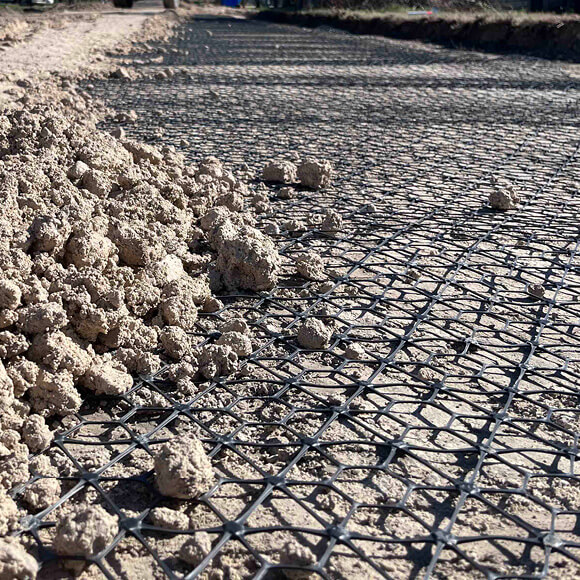
Tensar supplied approximately 350,000m2 of geogrid to stabilise the floating roads and support cabling throughout the site.
Benefits
- Demonstrated a proactive approach to conservation by adopting floating roads design from the outset and communicating the benefits to stakeholders
- Overcoming planning objections raised by stakeholders regarding peat loss, hydrological changes and the impact on flora and fauna which were addressed by the use of floating roads
- Minimised environmental impact compared to excavation, storage and reuse of peat
- Limited hydrological disruption by use of floating road, reducing impact on flora and fauna
- Reduced fill quantities - leading to reduced haulage cost and construction CO2 emission
To build and maintain the UK’s largest output onshore windfarm required construction of many kilometres of access track and buried cabling. The location of this farm over a remote area of peat bog posed additional challenges. Rock fill material was readily available from borrow pits close to the site so material cost was not a big issue. However, environmental disruption had to be kept to a minimum to satisfy stakeholders and interest groups. This required a solution that would limit peat removal and any hydrological impact on the peatland.
Floating roads were proposed from the earliest planning stages as an alternative to peat removal and backfill with rock. The use of Tensar stabilisation geogrid minimised the construction thickness for over 16km of floating road. This greatly reduced hydrological impact on the surrounding peat and the volume of rock fill to be transported. Tensar geogrid was also used in the base of cable trenches to stabilise the bedding and minimise support fill thickness, thereby reducing trench depths and limiting disruption and hydrological impact to the peatland.